






Why Realistic Expectations Matter From Day One
When someone starts researching gastric sleeve surgery or another weight-loss procedure, social media photos are often what quietly shape their first mental picture of the outcome. But before and after bariatric surgery realistic expectations involve far more than two contrasting photos side by side. Understanding the true pattern of weight loss, the health changes that come with it, and what it takes to protect those results for years afterward is what separates a patient who feels genuinely satisfied from one who feels disappointed despite real, meaningful progress. This article lays out that fuller picture in general, honest terms, without promising specific numbers or guaranteed outcomes, because every body responds differently based on its own health history and biology.
\n\nThe General Shape of the Weight-Loss Curve
\nOne of the most useful things a patient can understand before surgery is the general pattern that weight loss tends to follow afterward. While the exact pace and amount differ from person to person, most patients experience some version of the same broad curve:
\n- \n
- An earlier, faster phase: In the weeks and months immediately following surgery, weight loss is typically faster. This reflects the significant change in stomach capacity, eating patterns, and the strict nutritional stages patients follow closely with their medical team during this early period. \n
- A gradual slowing phase: As time passes, the rate of weight loss naturally begins to slow. This is a completely normal physiological response, not a sign that the surgery has failed or that the patient has lost discipline — it simply reflects the body settling toward a new, more stable weight. \n
- A plateau phase: Eventually, most patients reach a period where weight loss levels off noticeably. This plateau does not mark the end of the journey; it marks the beginning of a maintenance phase that requires just as much awareness and consistency in daily habits as the earlier, faster stage did. \n
It is important not to measure your own curve against someone else's, because the pace and extent of weight loss are shaped by many individual factors — the type of procedure performed, starting weight, age, overall health status, and how closely a patient follows the nutritional and activity guidance provided after surgery.
\n\nThe Victories the Scale Doesn't Measure
\nOne of the most overlooked aspects of casual conversations about bariatric surgery is the set of improvements that never show up as a number on a scale, yet often matter more to day-to-day quality of life than the weight itself:
\n- \n
- Improvement in weight-related health markers: Many patients dealing with insulin resistance, elevated blood sugar, or high blood pressure notice measurable improvement in these markers as weight decreases, always in coordination with their physician regarding any medication adjustments — never stopping medication independently. \n
- Joint comfort: Reduced mechanical load on the knees, hips, and spine often translates into noticeably easier daily movement and less of the chronic joint pain that frequently accompanies excess weight over the years. \n
- Sleep quality: Patients who previously struggled with disrupted breathing during sleep often report better sleep quality as weight decreases, which in turn tends to improve energy levels and concentration throughout the day. \n
- Mobility and everyday activity: Climbing stairs, walking longer distances, playing with children, or simply sitting comfortably in an airplane or car seat — these are small daily details that add up to a meaningful difference in quality of life. \n
- Confidence and general mood: Improved self-image and the ability to take part in social or physical activities that once felt difficult often has a genuine positive effect on many patients' overall emotional wellbeing. \n
These "non-scale victories" deserve to be celebrated just as much as any number on the scale, because they are frequently the real reason a patient chose surgery in the first place. This is also part of why an option like gastric sleeve surgery can be valuable across multiple dimensions of health that extend well beyond weight loss alone.
\n\nWhy Follow-Up Care and Nutrition Support Matter Long-Term
\nBariatric surgery is a powerful tool for achieving significant change, but it is not a standalone fix that works without ongoing attention. Sustaining results over the long term depends heavily on several elements that complement the surgery itself:
\n- \n
- Regular follow-up visits: These allow the surgical team to track the weight-loss trajectory, check for any vitamin or mineral deficiencies, and adjust medications or supplements as needed on an ongoing basis. \n
- Continued nutrition support: Guidance from a dietitian helps patients build sustainable eating habits suited to their new stomach capacity, ensuring the body still receives essential nutrients despite smaller portion sizes. \n
- Support groups: Connecting with others going through a similar experience can make a real difference in sustaining motivation, particularly during the plateau phase when progress feels slower and it is easy to become discouraged. \n
- Psychological support when needed: Some patients benefit from counseling to navigate a changing relationship with food or adjust to a new body image. This is a normal, accepted part of the process — not a sign of weakness. \n
Patients who maintain regular contact with their medical team and take part in structured follow-up programs are generally better equipped to work through the obstacles that naturally arise during any long-term lifestyle change.
\n\nSocial Media "Before and After" Photos Versus Reality
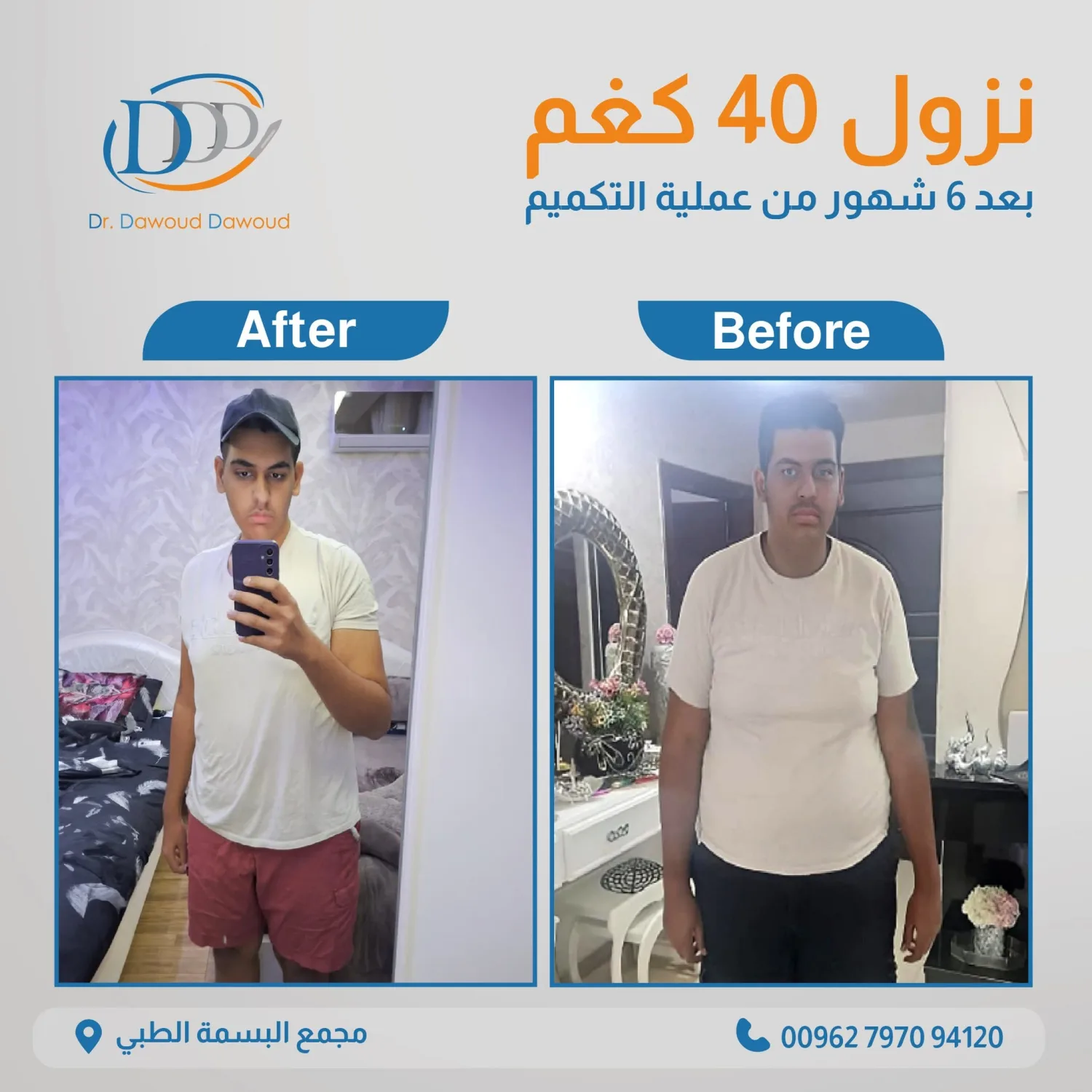
\nDramatic before-and-after photos have become common on social media, but they frequently compress a long, complicated story into just two carefully chosen moments. What these photos usually leave out includes:
\n- \n
- The actual amount of time the journey took, which is often measured in months or years rather than the few weeks a photo pair might suggest. \n
- The daily, ongoing effort involved — in the kitchen, at the gym, and in navigating social situations built around food. \n
- Significant individual variation between people due to age, genetics, the type of procedure performed, and each patient's underlying health condition. \n
- Temporary setbacks and challenges the person likely experienced along the way, which rarely make it into the polished final story. \n
- Camera angle, lighting, and body positioning, all of which can exaggerate the visual difference between two photos in ways that are not entirely accurate. \n
Comparing your own progress to a single photo you saw online is neither a fair nor an accurate way to judge your journey. It is always better to build your expectations through direct conversation with your surgeon, who understands the specifics of your health, rather than relying on content designed primarily to attract likes and views.
\n\nLoose Skin: A Realistic Possibility Worth Discussing in Advance
\nOne detail worth discussing openly before surgery is the possibility of loose or excess skin in certain areas of the body, particularly after losing a substantial amount of weight over a relatively short period. Skin is a tissue with a certain degree of elasticity, and its ability to retract after weight loss varies from person to person based on factors such as age, genetics, the total amount of weight lost, and habits like smoking or adequate hydration.
\nThis possibility is not a sign that anything went wrong with the surgery or that the patient failed to follow through properly — it is simply a natural response of the body to significant change over a relatively short timeframe. It is worth discussing this topic with your surgeon in advance to understand what to realistically expect in your specific case, and to learn about the options available later on if a patient wishes to address loose skin, whether through targeted strengthening exercises or, later, a consultation for complementary cosmetic surgery once weight has fully stabilized.
\n\nHow to Build Realistic Expectations Before Deciding
\nThe first step toward a successful outcome is entering the process with an accurate, grounded understanding of what to expect. Questions worth raising with a surgeon during an initial evaluation include:
\n- \n
- What is the general expected shape of my weight-loss trajectory, given my health profile and the specific procedure being considered? \n
- What kind of follow-up support is available after surgery, in terms of nutrition guidance and ongoing medical care? \n
- What personal factors might influence my individual outcome, positively or negatively? \n
- What are the possible side considerations, including loose skin, and how can they be addressed later if they occur? \n
An honest, detailed answer to these questions from an experienced surgeon gives a patient a realistic foundation to build expectations on, rather than relying on general impressions or comparisons to other people's experiences that may differ substantially from their own.
\n\nTaking the Next Step
\nUnderstanding before and after bariatric surgery realistic expectations is a genuine investment in the long-term success of your journey, not just an afterthought. If you are considering a weight-loss procedure and want an accurate evaluation based on your own specific health details, you can book an assessment with Dr. Dawoud Dawoud at his clinic in Jabal Amman, Al Basma Medical Complex, 6th floor, by reaching out directly on WhatsApp at +962797094120, for a consultation that addresses your health status and expectations honestly and personally.
Trusted medical references for general education: ASMBS · NIDDK · Mayo Clinic