



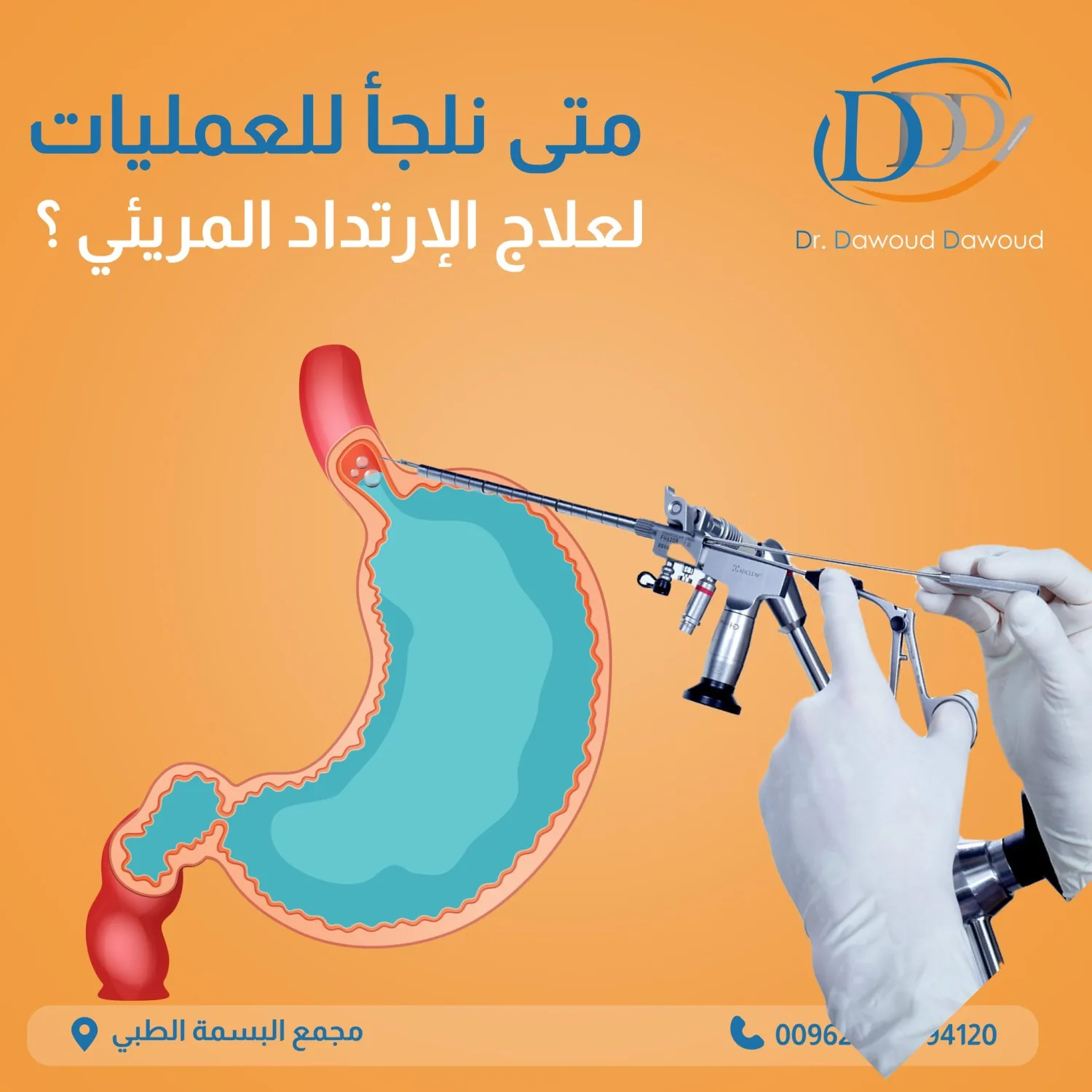
What is GERD treatment?
Gastroesophageal reflux disease (GERD) is the backflow of stomach acid into the esophagus, causing recurrent heartburn, a bitter taste, chronic cough and sometimes difficulty swallowing. Treatment is stepwise: lifestyle changes and acid-suppressing medication first, then laparoscopic anti-reflux surgery — Nissen fundoplication with hiatal hernia repair when present — for advanced or medication-resistant cases. Dr. Dawoud Dawoud evaluates each case in Amman with the needed tests and endoscopy before deciding the plan; not every reflux needs surgery.
A treatment decision based on assessment
The right surgical decision starts with understanding the diagnosis, symptoms, medical history, tests, and patient goals. Dr. Dawoud Dawoud explains the available options clearly and helps the patient choose the most suitable path.

Who may benefit from this service?
Suitability depends on the diagnosis and medical condition. The clinic focuses on matching treatment to the patient rather than using one plan for everyone.
- Patients with persistent symptoms affecting quality of life.
- Cases that need surgical assessment after tests or failed conservative care.
- Patients who want clear expectations before any procedure.
- Patients who can follow preparation and recovery instructions.
What happens during assessment?
The visit includes symptom review, examination, previous reports, medication history, and explanation of possible treatment options, risks, benefits, recovery, and follow-up.
Treatment is selected after confirming the problem.
Surgical and non-surgical choices are explained when relevant.
Recovery instructions and warning signs are discussed.
Treatment journey
Review of symptoms, history, and tests.
Choosing the suitable treatment approach.
Using laparoscopy or open surgery when appropriate.
Follow-up and lifestyle instructions.
Recovery and follow-up
Recovery varies by procedure and patient condition. The clinic provides clear instructions about activity, wounds, diet, medications, and when to contact the doctor.
- Follow the written instructions.
- Avoid heavy activity until cleared.
- Attend follow-up visits.
- Contact the clinic for severe pain, fever, bleeding, or persistent vomiting.
Why choose Dr. Dawoud Dawoud clinic?
The clinic combines professional surgical assessment with clear communication, realistic expectations, and careful follow-up in Jabal Amman.
Quick questions
Is surgery always needed?
No. The decision depends on diagnosis, symptoms, and response to conservative care.
How is the technique chosen?
The technique is selected based on the condition, tests, and patient factors.
How do I book?
Send a WhatsApp message with the service name to arrange an appointment.
Send the service name through WhatsApp to book a consultation at Dr. Dawoud Dawoud clinic in Jabal Amman.
Your Complete Guide to GERD Treatment and Anti-Reflux Surgery
If heartburn keeps returning despite antacids, you may have gastroesophageal reflux disease (GERD). In this guide, Dr. Dawoud Dawoud, consultant laparoscopic surgeon in Amman, Jordan, explains when medication is enough and when anti-reflux surgery is the better answer.
Why Acid Reflux Happens
GERD occurs when the lower esophageal sphincter — the valve between esophagus and stomach — weakens and lets acid rise. A hiatal hernia, where part of the stomach slides into the chest, weakens it further, and obesity raises the abdominal pressure that pushes acid upward. Typical symptoms are heartburn and regurgitation; atypical ones include chronic cough, hoarseness, and non-cardiac chest pain.
The Treatment Ladder: Lifestyle, Medication, Surgery
Treatment starts with lifestyle changes: weight loss, smaller meals, less caffeine and fizzy drinks, and not lying down after eating. Next come medications, usually proton pump inhibitors (PPIs). Surgery is worth discussing when symptoms persist despite medication, when reflux returns once pills stop, when you prefer not to take lifelong medication, when a large hiatal hernia is present, or when complications develop.
Laparoscopic Nissen Fundoplication, Step by Step
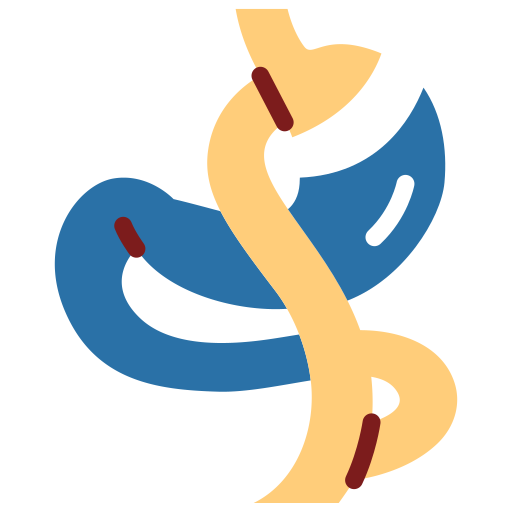
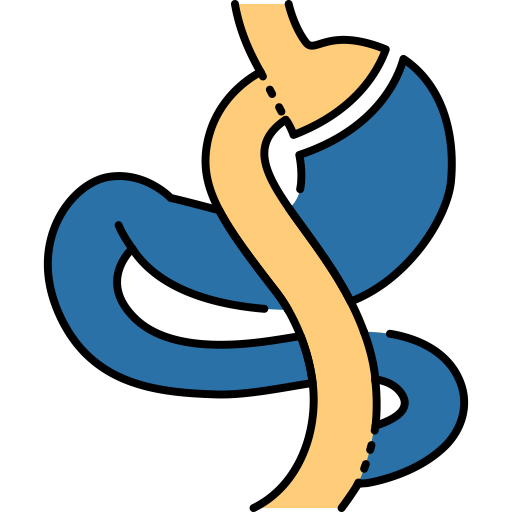
Nissen fundoplication is the gold-standard anti-reflux operation. Through small keyhole incisions, Dr. Dawoud repairs the hiatal hernia and wraps the upper stomach (the fundus) 360 degrees around the lower esophagus, creating a new competent valve. It usually takes 60 to 90 minutes, with a one-night hospital stay.
GERD with Obesity: When Gastric Bypass Is Better
With significant obesity, a Nissen wrap may not withstand the high abdominal pressure. In these cases, gastric bypass often treats both reflux and excess weight in one operation. Learn more in our article on GERD and obesity.
Recovery and Diet After Nissen Surgery
Most patients return to desk work within one to two weeks. The diet moves from liquids to pureed and soft foods over several weeks before returning to normal. Avoid carbonated drinks early on and chew well. Temporary bloating and difficulty burping are common at first and usually settle.
Honest Talk About Risks
In experienced hands the operation is very safe, but no surgery is risk-free: temporary difficulty swallowing is common in the first weeks and almost always improves, and rarely the wrap can slip or loosen years later and need revision.
Cost of GERD Surgery in Jordan
Cost varies with the size of the hiatal hernia, the hospital and length of stay, and the pre-operative tests such as endoscopy and manometry. Send your reports via WhatsApp and receive a clear, personalized quote within 24 to 48 hours.
Frequently Asked Questions
Does surgery cure GERD permanently?
In well-selected patients it gives excellent long-term control, and most stop acid medication entirely.
Will I still need acid medication?
Most patients stop PPIs entirely or cut them down sharply; a few need occasional doses.
When can I eat normally again?
Most people return to a near-normal diet within about four to six weeks, progressing from liquids to soft food.
Is the operation suitable for everyone?
No. Testing must confirm reflux truly causes your symptoms; many patients do well on medication alone.
What if I also have obesity?
Gastric bypass is often the smarter option because it treats reflux and weight together — Dr. Dawoud will discuss both openly.
Ready to leave chronic heartburn behind? Message Dr. Dawoud Dawoud's clinic on WhatsApp at +962 79 709 4120 or visit Al Basma Medical Complex, 6th floor, Jabal Amman, Jordan.
Selected educational references: SAGES · Mayo Clinic