

What does the number mean?
BMI gives an initial idea about weight, but it does not decide treatment alone.
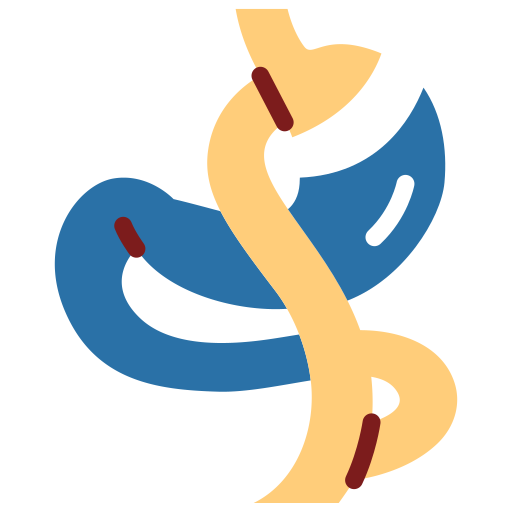 Classic gastric bypass
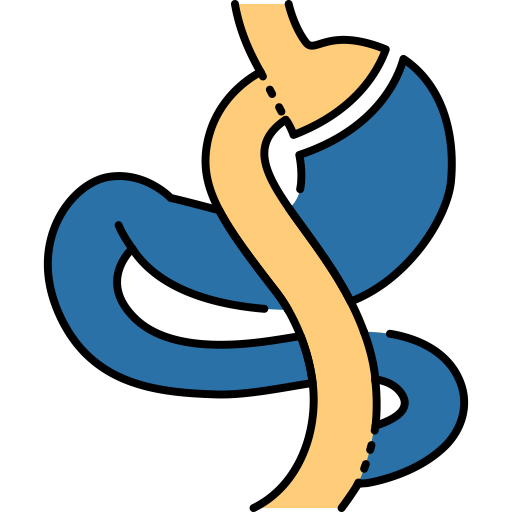 Mini gastric bypass
 Gastric sleeve
 Gynecomastia surgery
 GERD treatment
 Thyroidectomy
A quick tool to calculate BMI, with a reminder that surgical decisions require full medical assessment.
An estimated range based on published excess-weight-loss averages (55-70%); actual results vary by procedure and follow-up adherence.
This tool gives only a rough initial idea and is not a medical diagnosis. Treatment decisions rely on a full assessment including tests and medical history.
Discuss the result with the doctorBMI gives an initial idea about weight, but it does not decide treatment alone.
Diabetes, hypertension, reflux, or failed weight-loss attempts need deeper medical discussion.
Keep the result and discuss it as part of assessment including tests and lifestyle.
Concise answers to help you prepare for consultation and understand available options without exaggerated claims.
No. Suitability depends on BMI, associated conditions, eating habits, and test results.
Visceral fat raises pressure inside the abdomen, pushing stomach contents upward and weakening the lower oesophageal sphincter. When significant obesity accompanies severe reflux, gastric bypass may suit better than anti-reflux surgery alone because it addresses both problems together.
No official body grants a "best" title, but objective criteria include board certification, laparoscopic bariatric experience, a thorough pre-operative assessment, and structured follow-up. Dr. Dawoud Dawoud holds the Jordanian Board in General Surgery and performs gastric sleeve and gastric bypass laparoscopically in Amman with a clear follow-up plan, which is why many patients consider him among the best bariatric surgeons in Jordan.
Look for a surgeon certified by the Jordanian Board in General Surgery who explains the diagnosis and alternatives clearly and offers laparoscopy when it suits the case. Dr. Dawoud Dawoud performs gallbladder, hernia, thyroid, hemorrhoid, and gynecomastia surgery in Amman, laparoscopic or open depending on the case, with careful assessment before any surgical decision and follow-up after it.
Sleeve reduces stomach size, while bypass changes the food pathway and affects absorption and hormones. The choice depends on the case.
Type 2 diabetes may improve in many suitable patients, but outcomes depend on disease duration, pancreatic function, and follow-up.