

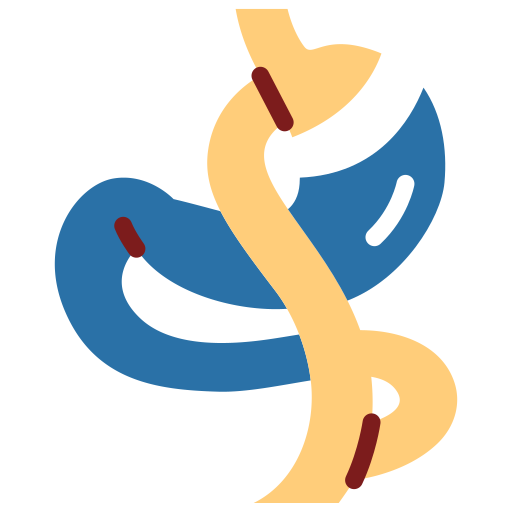
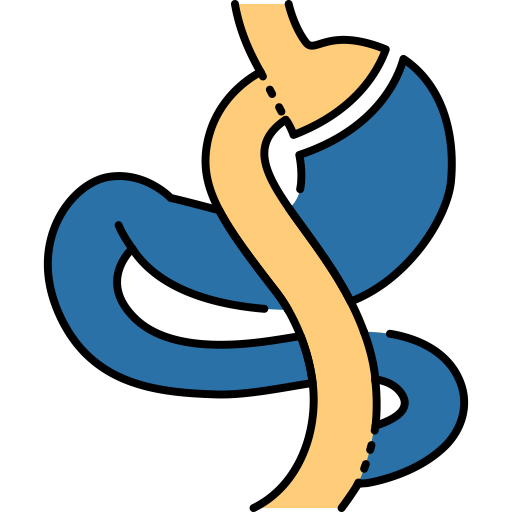




What is classic gastric bypass?
Classic gastric bypass (Roux-en-Y) is a laparoscopic bariatric operation in which the surgeon creates a small stomach pouch and connects it directly to the small intestine, so food bypasses most of the stomach and the first part of the bowel. It reduces food capacity and calorie absorption and improves satiety and blood-sugar hormones, which makes it particularly effective for obesity accompanied by type 2 diabetes or GERD. Dr. Dawoud Dawoud performs it laparoscopically in accredited private hospitals in Amman, Jordan, after a full medical assessment.
Gastric bypass surgery (Roux-en-Y) is a laparoscopic procedure that creates a small stomach pouch and reroutes part of the small intestine, reducing both food intake and calorie absorption. It is often the preferred option for patients with severe acid reflux or type 2 diabetes, typically producing loss of 70–80% of excess weight within two years.
A procedure beyond weight loss
Classic gastric bypass is one of the most studied bariatric procedures. It creates a smaller stomach pouch and connects it to a lower part of the intestine, which may reduce intake and affect hunger and glucose-related hormones.
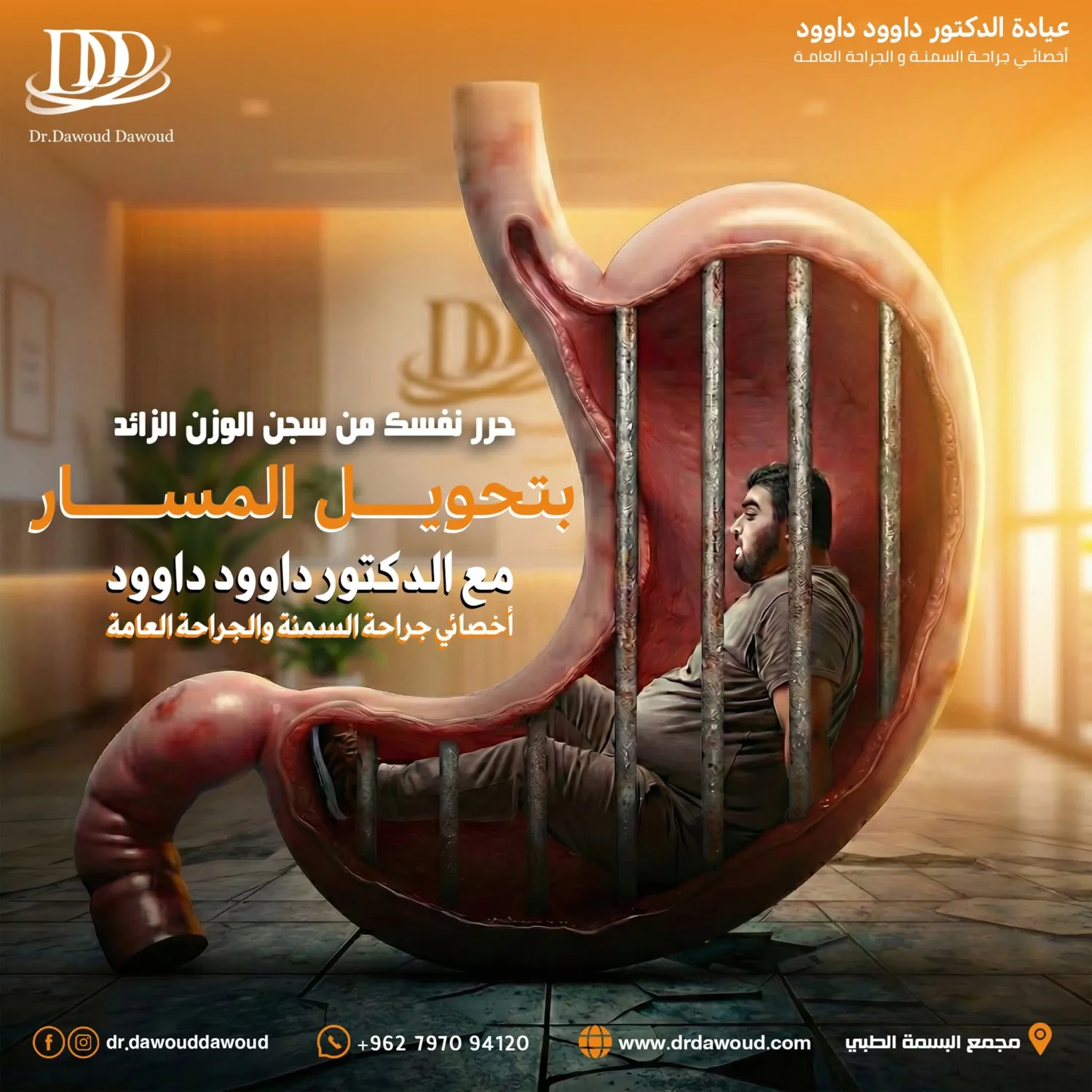
Who may benefit from gastric bypass?
Suitability is not based on weight alone. Medical history, eating pattern, reflux symptoms, and tests guide the decision.
- Patients needing sustained weight-loss support.
- Some patients with obesity and type 2 diabetes or insulin resistance.
- Selected reflux cases associated with obesity.
- Patients for whom sleeve gastrectomy may not be ideal.
Preoperative assessment
BMI, diabetes, blood pressure, fatty liver, reflux, anemia, vitamins, previous operations, and medications are reviewed before deciding.
Weight loss with improvement of associated conditions when suitable.
Bypass changes the food pathway and has stronger absorption and hormonal effects.
Nutrition follow-up and supplements are essential after surgery.
Treatment journey
Tests and review of diabetes, reflux, and nutrition.
Bypass, sleeve, and alternatives are compared clearly.
Instructions about fasting, medications, and nutrition.
Regular weight, vitamin, and symptom monitoring.
Recovery after gastric bypass
Recovery varies, and diet advances gradually from liquids to soft foods according to the plan.
- Follow staged diet instructions.
- Take supplements and attend lab follow-up.
- Limit high-sugar foods that may trigger dumping symptoms.
- Contact the clinic for severe pain, fever, persistent vomiting, or dehydration signs.
Why choose Dr. Dawoud Dawoud clinic?
The decision is built on balanced assessment, clear explanation of risks and benefits, and a follow-up plan matched to your case.
Quick questions about gastric bypass
Does it cure diabetes?
Type 2 diabetes may improve in selected patients, but results vary and cure cannot be guaranteed.
Can it help reflux?
It may be suitable for selected reflux patients with obesity after assessment.
Will I need vitamins?
Most patients need supplements and periodic lab monitoring.
Send a WhatsApp message mentioning classic gastric bypass to arrange a visit in Jabal Amman.
Your Complete Guide to Gastric Bypass Surgery
Roux-en-Y gastric bypass is the most extensively studied bariatric operation in the world and remains the benchmark against which newer procedures are measured. Dr. Dawoud Dawoud, laparoscopic and bariatric surgeon in Jabal Amman, explains how the classic bypass works, who benefits most, its honest risks, and what really drives gastric bypass cost in Jordan.
How does gastric bypass actually work?
Two laparoscopic steps define the operation. First, a small egg-sized gastric pouch is created from the top of the stomach; the rest of the stomach stays in place but no longer receives food. Second, the small intestine is divided and reconnected in a Y-shape so food bypasses most of the stomach and the duodenum. Because rerouting food changes the gut hormones that control hunger, satiety and blood sugar, bypass is classed as metabolic surgery: type 2 diabetes often improves within days, before major weight loss begins.
What happens on the day of surgery?
You are admitted fasting, meet the anesthesia team, and receive clot-prevention measures. The operation is performed through 4-5 small incisions and typically takes 90-150 minutes, with a leak test before closing. Most patients walk the same evening and go home after 1-2 nights with a written, staged nutrition plan.
Who should choose bypass over the sleeve?
Bypass is usually preferred for patients with severe reflux (GERD), patients with type 2 diabetes — see gastric bypass and type 2 diabetes — habitual sweet eaters, and those needing revision after a failed sleeve. Read the full sleeve vs bypass comparison, or explore the single-anastomosis mini gastric bypass.
What are the honest risks?
- Anastomotic leak: the most serious early complication, and a rare one; minimized by intraoperative leak testing and close monitoring.
- Marginal ulcer: risk rises sharply with smoking and anti-inflammatory painkillers — quitting is mandatory, as explained in smoking and bariatric surgery.
- Dumping syndrome: flushing, palpitations and nausea after sugary meals; unpleasant but manageable, and often a useful built-in deterrent.
- Lifelong supplementation: bypassing the duodenum reduces absorption of iron, calcium, B12 and vitamin D, so daily supplements and periodic blood tests are a permanent commitment.
How much does gastric bypass cost in Jordan?
There is no single number: cost depends on the surgeon's experience, hospital class, length of stay, stapler quality, and how complete the package is (tests, dietitian follow-up, post-op visits). Beware headline offers that hide extras. Visit our gastric bypass cost in Jordan page, or send your reports on WhatsApp for a fixed, all-inclusive quote within 24-48 hours.
Frequently asked questions
Does bypass cure type 2 diabetes? The accurate term is remission, not cure: many patients reach normal glucose with fewer or no medications, especially with shorter diabetes duration.
How much weight will I lose? Most committed patients lose about 60-80% of their excess weight within 12-18 months.
Can I get pregnant afterwards? Yes — fertility often improves; plan pregnancy 12-18 months after surgery with close vitamin monitoring.
Is it reversible? Technically yes, since nothing is removed, but reversal is complex and rarely indicated; treat it as a permanent decision.
When can I return to work? Desk jobs within 1-2 weeks for most patients; physically demanding work in about 3-4 weeks.
Dr. Dawoud Dawoud, Jordanian Board in General Surgery, performs every gastric bypass himself and follows his patients personally. Message us on WhatsApp at +962 79 709 4120 — Al Basma Medical Complex, 6th floor, Jabal Amman.
Selected educational references: ASMBS · NIDDK