




 Treatment service
What is laparoscopic inguinal hernia repair?
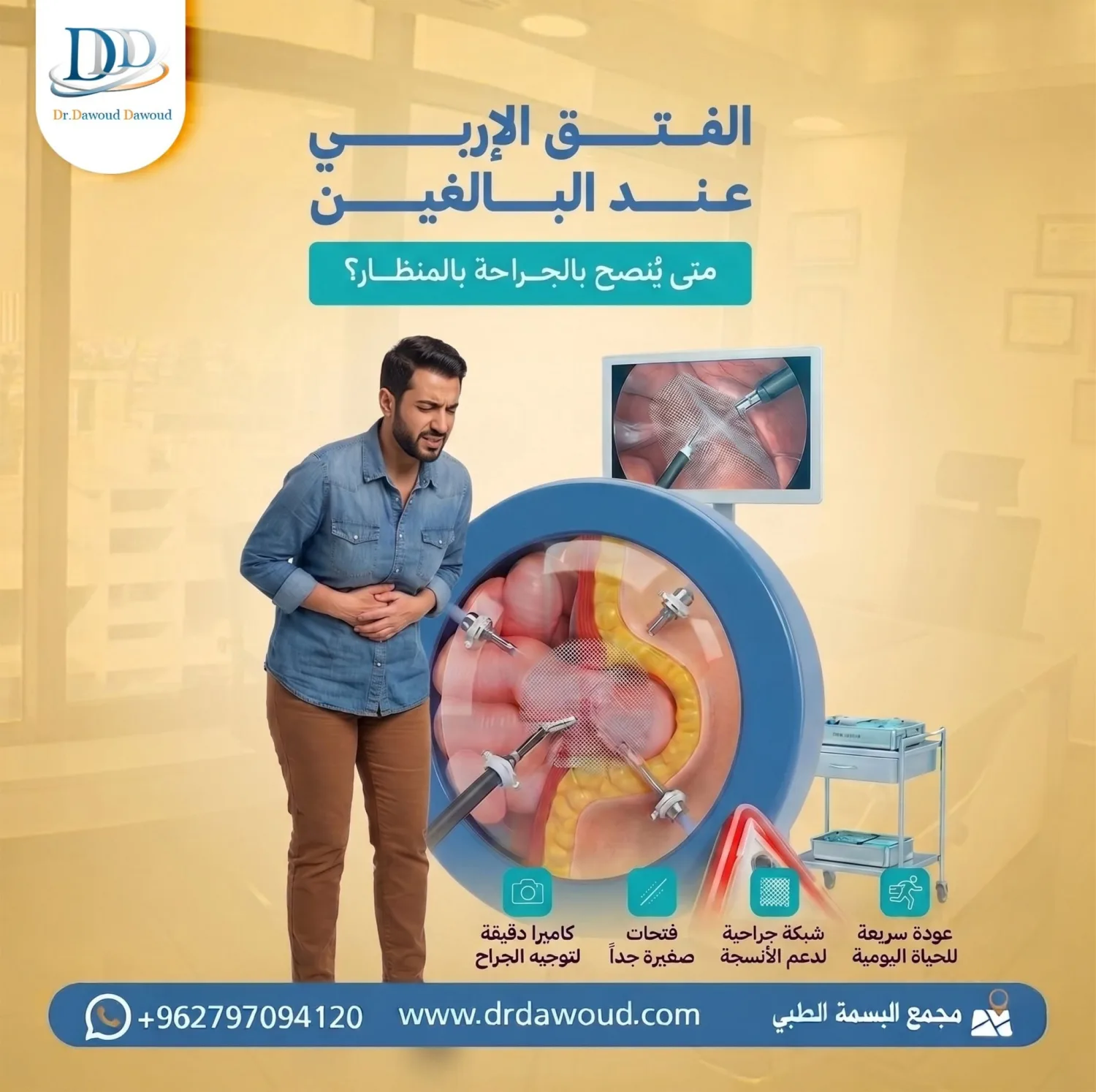
Laparoscopic inguinal hernia repair returns the protruding tissue to its place and reinforces the abdominal wall with a supportive mesh through small incisions, using the TEP or TAPP technique depending on the case. Laparoscopy offers less pain, faster recovery and smaller scars, and is especially suitable for bilateral and recurrent hernias. Dr. Dawoud Dawoud performs the repair in accredited hospitals in Amman, Jordan; patients usually go home the same day and return to desk work within a few days.
A treatment decision based on assessment
The right surgical decision starts with understanding the diagnosis, symptoms, medical history, tests, and patient goals. Dr. Dawoud Dawoud explains the available options clearly and helps the patient choose the most suitable path.

Who may benefit from this service?
Suitability depends on the diagnosis and medical condition. The clinic focuses on matching treatment to the patient rather than using one plan for everyone.
- Patients with persistent symptoms affecting quality of life.
- Cases that need surgical assessment after tests or failed conservative care.
- Patients who want clear expectations before any procedure.
- Patients who can follow preparation and recovery instructions.
What happens during assessment?
The visit includes symptom review, examination, previous reports, medication history, and explanation of possible treatment options, risks, benefits, recovery, and follow-up.
Treatment is selected after confirming the problem.
Surgical and non-surgical choices are explained when relevant.
Recovery instructions and warning signs are discussed.
Treatment journey
Review of symptoms, history, and tests.
Choosing the suitable treatment approach.
Using laparoscopy or open surgery when appropriate.
Follow-up and lifestyle instructions.
Recovery and follow-up
Recovery varies by procedure and patient condition. The clinic provides clear instructions about activity, wounds, diet, medications, and when to contact the doctor.
- Follow the written instructions.
- Avoid heavy activity until cleared.
- Attend follow-up visits.
- Contact the clinic for severe pain, fever, bleeding, or persistent vomiting.
Why choose Dr. Dawoud Dawoud clinic?
The clinic combines professional surgical assessment with clear communication, realistic expectations, and careful follow-up in Jabal Amman.
Quick questions
Is surgery always needed?
No. The decision depends on diagnosis, symptoms, and response to conservative care.
How is the technique chosen?
The technique is selected based on the condition, tests, and patient factors.
How do I book?
Send a WhatsApp message with the service name to arrange an appointment.
Send the service name through WhatsApp to book a consultation at Dr. Dawoud Dawoud clinic in Jabal Amman.
Your Complete Guide to Laparoscopic Inguinal Hernia Repair
An inguinal hernia is the most common hernia of all, usually a groin bulge in men that grows with standing, coughing, or lifting. Dr. Dawoud Dawoud, laparoscopic and general surgeon in Amman, Jordan, explains what to expect.
Why an Inguinal Hernia Never Heals on Its Own
An inguinal hernia forms when intestine or fatty tissue pushes through a weak point in the lower abdominal wall. No medicine, belt, or exercise can close this mechanical defect — the opening only widens with time, so surgery is the only effective treatment. Sudden severe pain with a firm bulge that will not reduce when lying down, especially with nausea or vomiting, signals strangulation — go to the emergency room immediately.
TEP and TAPP: The Two Laparoscopic Techniques
Laparoscopic repair uses three incisions of about one centimetre. In TEP the hernia is repaired entirely outside the abdominal cavity, often preferred for first-time hernias; in TAPP the surgeon works from inside the abdomen, useful after previous surgery, for large hernias, or to inspect both sides. Laparoscopy also allows both groins to be repaired in a single session through the same incisions. Read our detailed article on laparoscopic inguinal hernia repair.
Is Hernia Mesh Safe?
A medical-grade mesh reinforces the weak area and markedly lowers recurrence versus sutures alone. Modern meshes are inert, biocompatible, used worldwide for decades, and integrate into your tissue within weeks — patients do not feel them in daily life once healed.
Surgery Day and Recovery
Performed under general anaesthesia, the operation usually takes 30-60 minutes depending on hernia size and whether one or both sides are repaired; most patients go home the same day. You walk on the day of surgery, office workers typically return within a week, and heavy lifting waits 3-4 weeks until the mesh is fully anchored.
The Risks, Honestly
Possible complications include a temporary fluid collection (seroma) that usually resolves on its own, minor bruising, rare chronic groin pain — less frequent with laparoscopy — and a low recurrence rate with mesh in experienced hands.
Hernia Surgery Cost in Amman, Jordan
The cost of inguinal hernia surgery in Jordan depends on clear factors: single or bilateral repair, mesh type and quality, hospital category, and insurance. Instead of generic figures, send your case on WhatsApp for a clear, itemised quote within 24-48 hours.
Choosing Your Hernia Surgeon
Ask about dedicated laparoscopic experience, hernia case volume, and mastery of both TEP and TAPP. Dr. Dawoud combines advanced laparoscopic expertise with personal follow-up through full recovery, and also treats umbilical, incisional, and hiatal hernias — see the hernia repair services page.
Will the hernia come back after surgery?
Recurrence after laparoscopic mesh repair is very low, especially if you avoid early heavy lifting and treat chronic cough or constipation.
Is the mesh permanent?
Yes — it stays for life, integrates with your tissue within weeks, and needs removal only in very rare cases.
When can I exercise again?
Walking from day one, light exercise after about two weeks, and weightlifting after 3-4 weeks with your surgeon's approval.
Can both sides be repaired at once?
Yes — both hernias are fixed in one session through the same small incisions, without meaningfully longer recovery.
What happens if I ignore my hernia?
It slowly enlarges, becomes harder to repair, and may strangulate at any time, turning a planned operation into a riskier emergency.
Do not delay: message Dr. Dawoud Dawoud's clinic on WhatsApp at +962 79 709 4120 for an appointment or a detailed quote within 24-48 hours. Clinic: Jabal Amman, Al Basma Medical Complex, 6th floor, Amman, Jordan.
Selected educational references: SAGES · SAGES Guidelines