

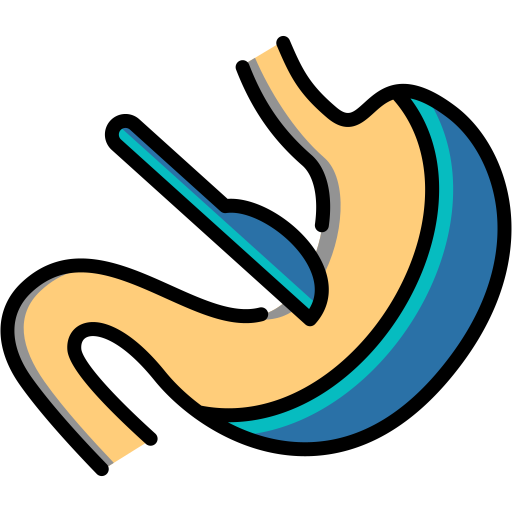


After a laparoscopic gastric sleeve, your stomach becomes a narrow tube that holds roughly 100–150 ml, and its staple line needs several weeks to heal safely. That is why you do not go straight back to normal food: you move through a planned progression — liquids, then purees, then soft foods, then regular textures with new habits. This guide walks through the four stages with familiar examples from the Jordanian and Arab table, plus the golden rules that protect your new stomach and lock in your results.
Why is the diet staged instead of immediate?
The progression serves three purposes: it protects the staple line while it heals, it prevents the nausea and vomiting that come from overloading a stomach that is still swollen, and it retrains you to eat small portions at a calm pace — a habit you will keep for life. Most patients complete the stages in about six weeks, though your surgical team may extend or shorten any stage depending on how you respond.
Stage 1 (days 1–7): clear then full liquids
The first week is about hydration, not calories. You start with clear liquids, then add low-fat, sugar-free full liquids:
- Water in small, frequent sips throughout the day
- Strained clear chicken or vegetable broth, with no solids or fat
- Sugar-free jello
- Unsweetened herbal teas such as chamomile, anise, and mint
- Skim milk or diluted laban (drinking yogurt)
Avoid straws, which pull air into the stomach, and stay completely away from fizzy or sweetened drinks.
Stage 2 (weeks 2–3): pureed foods
Once your team gives the go-ahead, move to completely smooth, baby-food textures with no solid pieces:
- Blended lentil soup, strained until silky
- Boiled chicken breast pureed with a little broth
- Mashed potato thinned with skim milk
- Plain low-fat yogurt (laban)
- Smooth hummus, thinned and made with very little oil
- Protein shakes as advised by the clinic dietitian
Start with two to three tablespoons per meal, and always take the protein puree before anything else.
Stage 3 (weeks 4–5): soft foods
Now you chew again, but everything must be tender enough to break apart with a fork:
- Soft scrambled eggs
- Well-cooked flaky fish — the gentlest animal protein at this stage
- Shredded boiled or slow-cooked chicken
- Labneh and soft, low-salt white cheeses
- Vegetables cooked until very soft, such as zucchini, carrots, and spinach
Keep each bite the size of a pea and chew it thoroughly before swallowing.
Stage 4 (week 6 onwards): regular textures, new habits
Reintroduce normal foods gradually, one new item at a time, so you can tell exactly what you tolerate. Build every plate the same way: protein first, vegetables second, and only a small amount of starch if there is room left. Portions stay small, and you continue the vitamins and minerals your surgeon prescribed.
The golden rules that make the sleeve work
- Protein first at every meal, aiming for roughly 60–80 g per day as your dietitian advises.
- No drinking for about 30 minutes before and after meals, so liquid does not fill the small stomach or wash food through too quickly.
- Sip 1.5–2 liters of fluid daily between meals to avoid dehydration.
- Give each meal 20–30 minutes and chew every bite until it is smooth.
- Stop at the first signal of fullness — one extra bite can mean nausea or pain.
- Use small plates and small spoons to control portions effortlessly.
Which foods should wait a few months — and why?
- Rice and fresh bread: they swell inside the small stomach and cause a heavy, blocked feeling.
- Carbonated drinks: the gas presses on the healing stomach and causes pain and bloating.
- Fried and fatty foods: slow to digest and a common trigger for nausea and reflux.
- Sugary juices and soft drinks: empty calories that stall weight loss, and many patients tolerate them poorly after surgery.
- Tough red meat: its fibers are hard to chew and digest early on and often feel "stuck"; delay it, then start later with finely minced meat.
Common problems during the stages — and what to do
Nausea after eating
Most often caused by eating too fast or past the point of fullness. Slow down, take smaller bites, and choose a lighter texture at the next meal.
Food feels "stuck" behind the breastbone
This usually means the bite was too big or not chewed enough. Stop eating, move around a little, and do not try to wash it down with water right away. If it happens at most meals, tell the clinic.
New intolerances to foods you used to love
Many patients temporarily cannot tolerate rice, red meat, or milk after a sleeve. This is common and usually improves over the following months — retry the food later in a small amount rather than banning it forever.
Signs that call for contacting the clinic without delay
Repeated vomiting that keeps you from drinking, severe or worsening abdominal pain, fever, or signs of dehydration such as dizziness and scant, dark urine.
Your actual plan is written for you alone
Everything above is general education. Your real schedule — how long each stage lasts, your exact protein target, which supplements you take — is set by our clinic dietitian based on your weight, lab results, and overall health, and is adjusted with you visit by visit.
To book an appointment or ask about nutrition after your sleeve, message us on WhatsApp at +962797094120. Dr. Dawoud Dawoud Clinic — Jabal Amman, Al Basma Medical Complex, 6th floor.
Trusted medical references for general education: ASMBS · NIDDK · Mayo Clinic