





Why Do Surgeons Ask You to Wait 12–18 Months Before Conceiving?
The first twelve to eighteen months after bariatric surgery are the rapid weight-loss phase, when most patients lose the largest share of their excess weight. In practice that means a deliberately low calorie intake, constantly shifting vitamin and mineral absorption, and nutritional stores that have not yet settled at their new baseline. A growing baby, by contrast, needs a steady and predictable supply of energy, protein, iron and folate — something that is hard to guarantee while the mother's weight is changing week by week.
That is why bariatric societies worldwide recommend delaying pregnancy until your weight has clearly plateaued and your blood tests have returned to normal, typically 12 to 18 months after the operation. The waiting period is not a warning about permanent danger; it is simply choosing the moment when your body's stability meets your baby's needs.
The Happy Surprise: Why Does Conceiving Become Easier After Surgery?
Improved fertility is one of the most consistent benefits of major weight loss. Obesity is closely linked to irregular ovulation, polycystic ovary syndrome (PCOS) and insulin resistance, all of which lower the chance of conceiving. After surgery:
- Menstrual cycles often become regular within a few months, especially in women with PCOS.
- Spontaneous ovulation can return, sometimes even in women who previously needed fertility medication.
- Insulin sensitivity improves and oestrogen stored in fat tissue rebalances, supporting both conception and early pregnancy.
This is precisely why the timing advice matters: many unplanned pregnancies happen in the first months after surgery because fertility returns faster than patients expect. Reliable contraception during the waiting period is part of the treatment plan, not an afterthought.
Sleeve or Bypass: Does the Type of Operation Change the Plan?
What If You Had a Sleeve?
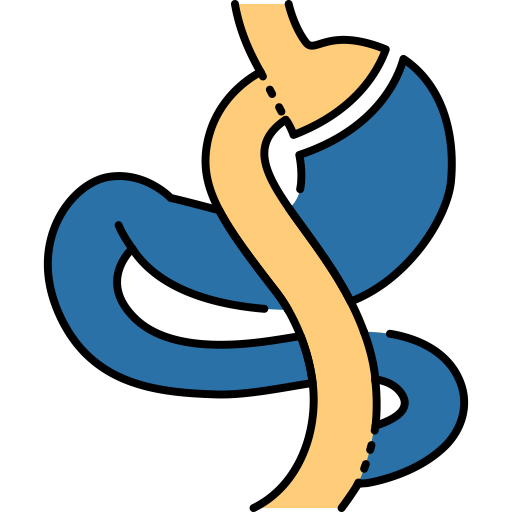
Unlike a bypass, gastric sleeve surgery reduces the size of the stomach without rerouting the intestine, so nutrient absorption stays close to normal. The main task during pregnancy is fitting your protein and vitamin needs into smaller meals, with routine checks of iron, vitamin B12 and vitamin D.
What If You Had a Bypass?
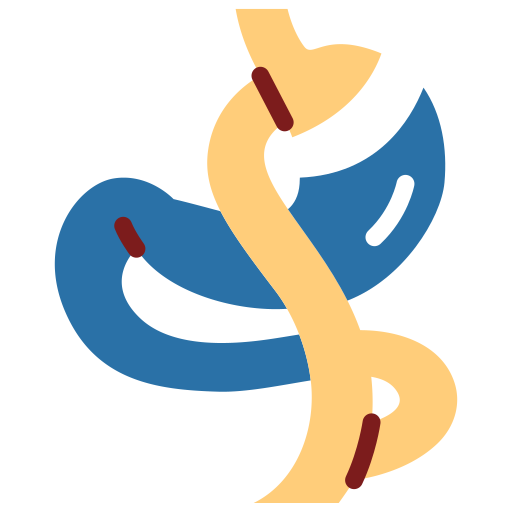
Gastric bypass routes food past part of the stomach and small intestine — the very segment responsible for absorbing several key nutrients — so the risk of deficiency is higher and deserves closer attention:
- Folate (folic acid): the single most critical nutrient in early pregnancy, protecting the baby from neural tube defects.
- Iron and vitamin B12: deficiencies cause maternal anaemia and can affect the baby's growth.
- Calcium and vitamin D: essential for building the baby's skeleton while protecting the mother's bones.
That is why comprehensive blood work is done before conception and repeated every trimester, with supplement doses adjusted to the results — usually higher than standard prenatal vitamins provide.
How Should You Prevent Pregnancy During the Waiting Period?
Here is a practical point patients rarely hear: oral contraceptive pills may be absorbed less reliably after gastric bypass, making them less dependable than usual. Discuss alternatives with your doctor — a hormonal or copper IUD is the most effective choice at this stage, and injections or implants also work well because they do not rely on intestinal absorption at all.
Ready to Conceive After Your Weight Has Stabilised? Four Steps
- Book a pre-conception assessment with your bariatric team: folate, vitamin B12, iron and ferritin, calcium, vitamin D and protein levels.
- Correct any deficiency before stopping contraception, not after.
- Start daily folic acid at least three months before trying to conceive.
- Arrange coordinated follow-up between your obstetrician and your bariatric surgeon throughout the pregnancy.
What Does Pregnancy Follow-Up Look Like After Bariatric Surgery?
Pregnancy after bariatric surgery is managed as a pregnancy that deserves extra attention, not as an emergency. Expect vitamin and mineral panels every trimester, and weight-gain targets set individually according to your weight at the start of pregnancy — usually more modest than in a conventional pregnancy. One detail worth knowing concerns the gestational diabetes screen: the standard test involves drinking a concentrated glucose solution, which can trigger unpleasant dumping symptoms after a bypass. Alternatives such as a week of home glucose monitoring exist, so always tell your obstetric team which operation you had.
So Is Pregnancy After Bariatric Surgery Ultimately Safe?
Yes — and the numbers back it up. Thousands of women conceive and deliver safely after bariatric surgery every year, and studies show that pregnancy after weight stabilisation is in several respects safer than pregnancy with severe obesity, with lower rates of gestational diabetes, high blood pressure and pre-eclampsia. Three things turn that potential into reality: the right timing, consistent supplementation and coordinated care between your two medical teams.
If you are planning a pregnancy after weight loss surgery, or considering surgery and wondering how it will affect your fertility and family plans, Dr. Dawoud Dawoud will be glad to discuss your case and build a timeline that suits you. Message us on WhatsApp at +962797094120, or visit Dr. Dawoud Dawoud Clinic, Jabal Amman, Al Basma Medical Complex, 6th floor.
Trusted medical references for general education: ASMBS · NIDDK · Mayo Clinic