




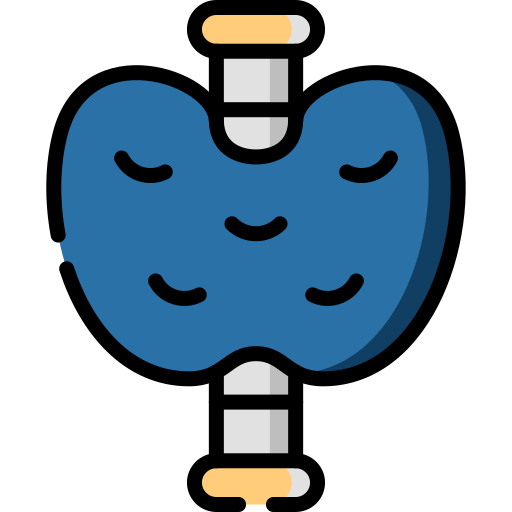

When a doctor recommends thyroidectomy, most patients arrive with a long list of legitimate questions. The thyroid gland regulates metabolism and energy throughout the body, so any surgical decision involving it deserves a detailed conversation between patient and surgeon before scheduling the procedure. Below are the key questions we encourage every patient to ask, along with clear, informative answers to support a confident decision.
Why is thyroidectomy being recommended in my case?
Several medical conditions can lead a surgeon to recommend removing all or part of the thyroid gland:
- Thyroid nodules: solid or fluid-filled lumps within the gland — some benign, others requiring careful evaluation to rule out malignancy.
- Goiter (enlarged thyroid): gland enlargement that can press on the trachea or esophagus, affecting breathing or swallowing.
- Hyperthyroidism: conditions such as Graves' disease that fail to respond adequately to medication or radioactive iodine therapy.
- Suspected thyroid cancer: a concerning biopsy result or imaging finding that calls for surgery as both a diagnostic and therapeutic step.
Before any surgical decision, diagnosis relies on a combination of tests: thyroid ultrasound to assess the size, shape, and location of nodules; fine-needle aspiration (FNA) biopsy to analyze cell characteristics; and thyroid function blood tests (TSH, T3, T4) to establish the current hormonal status.
Total vs. partial thyroidectomy — what determines the choice?
Choosing the extent of surgery is one of the most important points to discuss with your surgeon:
Partial thyroidectomy (lobectomy)
Only one lobe of the gland is removed. This is generally preferred when the problem is confined to one side — for example, a single small nodule suspected to be benign — while preserving the other lobe, which often continues producing adequate hormone on its own.
Total thyroidectomy
The entire gland is removed. This is typically recommended for a large goiter affecting both lobes, hyperthyroidism unresponsive to other treatments, or when cancer is confirmed or strongly suspected, since removing all thyroid tissue lowers the chance of recurrence.
The final decision depends on the size and location of the abnormality, biopsy results, and the patient's overall hormonal status, and is discussed individually for each case.
What risks should I understand beforehand?
Like any surgical procedure, thyroid surgery carries specific risks that every patient should clearly understand before consenting to the operation:
- Recurrent laryngeal nerve injury: this nerve runs behind the thyroid gland and controls vocal cord movement; rare injury can cause temporary hoarseness or, less commonly, a permanent voice change.
- Parathyroid gland disturbance: these small glands adjacent to the thyroid regulate blood calcium levels; if affected during surgery, they can cause a temporary drop in calcium requiring monitoring and short-term supplementation.
- Bleeding: as with any surgery, closely monitored in the hours immediately following the procedure.
- Infection: uncommon with proper sterile technique and wound care.
The surgical team uses precise techniques, including intraoperative nerve monitoring in appropriate cases, to keep these risks as low as possible.
Will I need lifelong thyroid hormone replacement?
This central question depends on the extent of surgery performed:
After total thyroidectomy, the body needs an external source of thyroid hormone, so patients begin daily, lifelong levothyroxine replacement. The dose is calculated initially and then adjusted gradually based on periodic blood tests — primarily TSH — until a stable level that mimics normal thyroid function is reached.
After partial thyroidectomy, the remaining lobe may continue producing enough hormone without replacement therapy, though a portion of patients eventually require a supportive dose if follow-up testing reveals underproduction. Regular monitoring of thyroid function after surgery is essential in both scenarios to adjust treatment as needed.
What does recovery actually look like?
Understanding the expected recovery path helps with both practical and emotional preparation:
- Hospital stay: usually one night for observation, particularly to monitor calcium levels and voice, with same-day discharge possible in selected cases.
- Scar care: the incision is relatively small and typically placed within a natural neck crease to minimize visible scarring, with clear instructions for daily wound care and sun protection during the first few months.
- Voice changes to watch for: mild, temporary hoarseness in the first few days is normal, but any severe or persistent hoarseness should be reported to your doctor immediately.
- Follow-up blood tests: including calcium levels to confirm parathyroid recovery, and thyroid function tests to fine-tune replacement therapy if needed.
For more details on the procedure and what to expect before and after surgery, visit our thyroidectomy surgery page.
Conclusion
Asking these questions before surgery gives you a clearer understanding of your condition and makes you an active partner in your treatment decision. Every case differs in the extent of surgery needed, the level of risk involved, and the likelihood of requiring hormone replacement, which is why an individualized consultation remains the most important step before any surgical decision. To book a consultation and discuss your case in detail with Dr. Dawoud Dawoud, reach out via WhatsApp at +962797094120, at Dr. Dawoud Dawoud Clinic, Jabal Amman, Al Basma Medical Complex, 6th floor.
Trusted medical references for general education: ASMBS · NIDDK · Mayo Clinic