







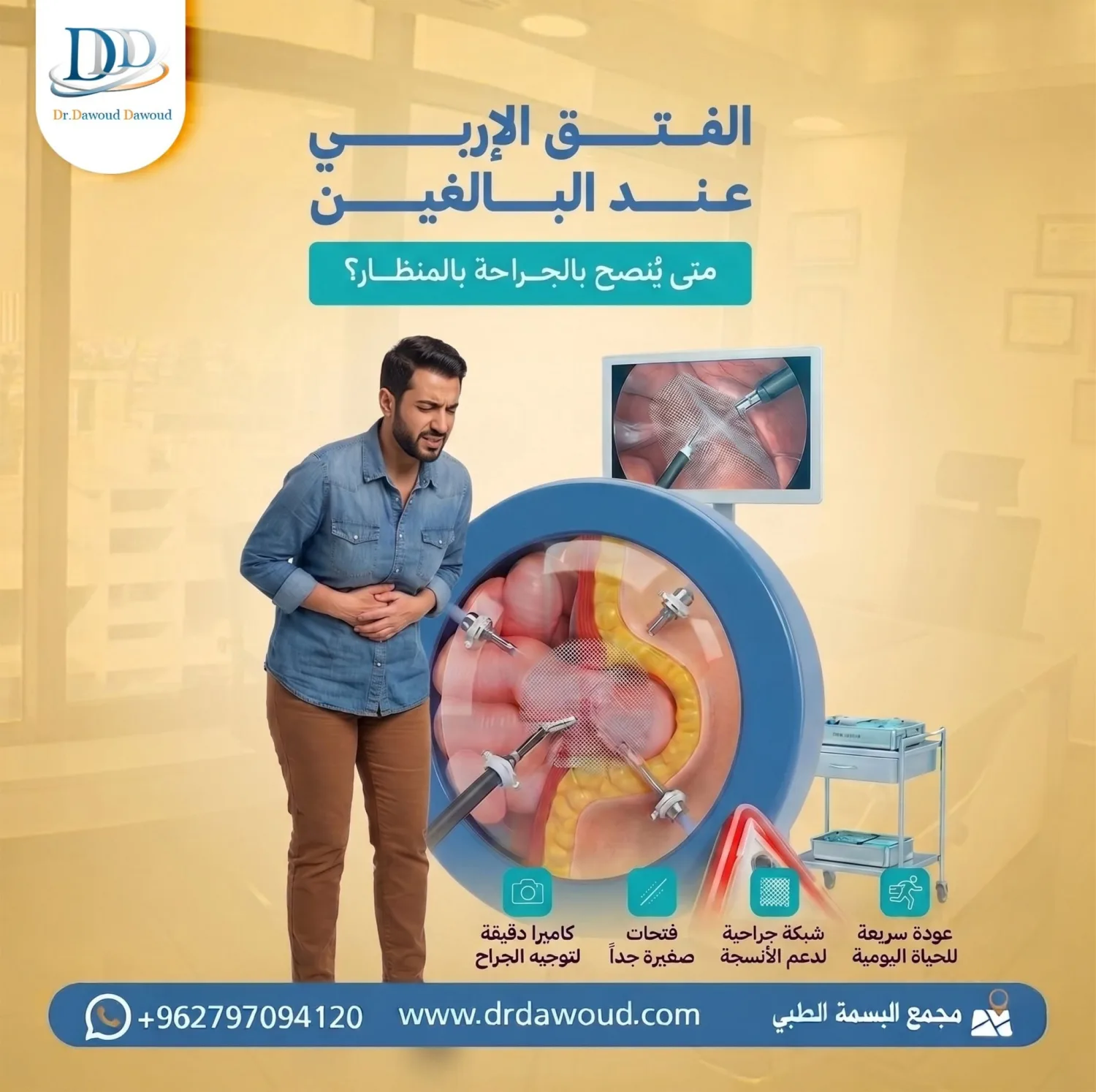
Common Hernia Types and How They Shape the Surgical Approach
A hernia occurs when tissue or a portion of the intestine pushes through a weak point in the abdominal wall muscles, and it is one of the most common reasons patients seek a surgical consultation. Not all hernias are the same, however, and both the location and the size of the hernia are major factors in deciding which surgical approach is most suitable. An umbilical hernia develops at or near the navel and is often small to moderate in size, making it a case that frequently responds well to laparoscopic repair. An inguinal hernia occurs in the lower abdomen near the groin, is more common in men, and can affect one or both sides. This distinction matters because bilateral inguinal hernias are often good candidates for laparoscopy, since the technique allows the surgeon to address both sides through the same small access points without a separate incision for each. An incisional or ventral hernia, which develops at the site of a previous surgical scar, tends to be more complex because the tissue in that area has already been affected by scarring from the earlier operation. These cases often require a more careful evaluation to determine whether a laparoscopic approach is appropriate or whether open surgery offers a safer path. In general, the larger or more anatomically complex a hernia is, and the more surgical history is involved at that site, the more individualized the pre-operative assessment needs to be before settling on an approach.
When Is Laparoscopic Repair Typically Favored?
Laparoscopic hernia repair involves inserting a small camera and specialized instruments through a few tiny incisions in the abdomen rather than one larger cut, and this approach carries several potential advantages that make it a preferred option in many suitable cases. Smaller incisions are generally associated with less post-operative pain compared with open surgery, along with a greater chance of returning to daily activities and work sooner for patients who are good candidates for the technique. Laparoscopy also gives the surgeon a broad internal view of the abdominal wall, which is particularly useful for bilateral inguinal hernias or when there is a suspicion of an additional hernia that was not clearly identified on physical examination alone. Small to medium umbilical hernias, straightforward inguinal hernias, and certain recurrent hernias following a prior open repair are examples that are frequently good candidates for this approach. That said, the decision always depends on the surgeon's evaluation of each individual case — not every hernia that could theoretically be repaired laparoscopically is necessarily the best practical choice for every patient.
When Does Open Surgery Remain the More Suitable Option?
Despite the advantages laparoscopy can offer, traditional open surgery remains a necessary and, in a number of situations, the safer and more effective approach. Very large hernias or complex incisional hernias involving a significant amount of protruding tissue can be difficult to manage fully through laparoscopic instruments and often require the wider direct access that an open incision provides. Extensive prior surgical scarring in the abdomen, especially after multiple previous operations, can make laparoscopic access more difficult and riskier because of internal adhesions that may have formed between tissues. In these situations, open surgery allows the surgeon to work with and address these adhesions directly and more safely. Certain recurrent hernias — those that have reappeared after an earlier repair — may also call for an open technique to achieve a more durable repair, depending on the specifics of the case and the location of the original hernia. Finally, some general medical conditions can make laparoscopic access less than ideal, such as certain coexisting health issues that affect a patient's ability to tolerate the conditions required for laparoscopic surgery. In these circumstances, the surgeon carries out a comprehensive assessment to choose the approach that best protects patient safety while still achieving an effective repair.
The Role of Surgical Mesh in Hernia Repair
In the majority of hernia repairs, whether performed laparoscopically or through open surgery, the surgeon uses a specialized medical mesh to reinforce the abdominal wall at the point of weakness. The basic principle behind mesh use is to distribute tension across a wider area of tissue rather than relying solely on suturing the edges of the defect together, which helps reduce the localized stress that can contribute to the hernia returning in the future. The type of mesh and the method used to secure it vary depending on the hernia's location, size, and the surgical technique chosen, and the surgeon selects the most appropriate option based on each patient's individual case. In practical terms, the underlying principle of mesh reinforcement does not differ greatly between laparoscopic and open approaches, though the way the mesh is introduced and fixed in place does vary with the technique used. Regarding recovery, having mesh placed does not necessarily mean a longer recovery period — its main purpose is to reduce the likelihood of the hernia recurring over the long term, and this is an important point to discuss with the surgeon to understand what applies to your specific situation.
General Recovery Differences Between Laparoscopic and Open Repair
Recovery after hernia repair varies depending on the surgical approach used, and it is important to treat these differences as general tendencies rather than fixed figures that apply to every patient. In general, patients who undergo laparoscopic hernia repair tend to experience somewhat less discomfort in the first few days after surgery and often return to light activity and walking a bit sooner, largely due to the smaller size of the surgical incisions. After open surgery, discomfort at the incision site may last somewhat longer, and patients are often advised to avoid strenuous activity or heavy lifting for a longer period to allow the wound and the deeper tissue layers to heal adequately. In both cases, final guidance on when it is safe to return to work, resume exercise, or drive depends on the specifics of the individual case, the size of the hernia, and the physical demands of the patient's daily activities or occupation. Patients should always follow their surgeon's specific post-operative instructions rather than relying on general comparisons between techniques.
What to Discuss With Your Surgeon Before Choosing an Approach
Deciding on the most suitable technique for hernia repair is not a decision made in isolation — it is the outcome of a shared discussion between patient and surgeon that takes several factors into account. It is worthwhile for patients to ask specifically about the type, size, and location of their hernia, and about the reasons why laparoscopy or open surgery is being recommended for their particular case. Discussing prior surgical history is equally important, especially if there have been previous operations in the abdominal area that could influence the decision. Asking whether mesh will be used, and if so what type, is another useful question. It is also worth discussing the expected duration of the procedure, the type of anesthesia involved, and the approximate timeline for returning to work or normal activities based on the nature of the case. This kind of open conversation helps patients understand the surgical decision more clearly and allows the surgeon to tailor a treatment plan that fits each patient's overall health and lifestyle.
Dr. Dawoud Dawoud, a specialist in bariatric, laparoscopic, and general surgery, carefully evaluates each hernia case individually to determine whether laparoscopic or open hernia repair is the more suitable approach for you, based on the type and size of your hernia along with your medical history. If you are experiencing hernia symptoms or would like a specialist opinion on the best treatment option for your case, you can book an assessment with Dr. Dawoud Dawoud's clinic by reaching out on WhatsApp at +962797094120.
Trusted medical references for general education: ASMBS · NIDDK · Mayo Clinic